التحدي
في منظومة الإنتاج النسيجي الحديثة، تفرض العملية بأكملها من معالجة الألياف إلى إنتاج الأقمشة الجاهزة متطلبات عالية جدًا على استقرار تشغيل المعدات ودقة تنظيم السرعة وكفاءة استخدام الطاقة. وبوصفه جهاز إلكترونيات قدرة يتيح تعديل سرعة المحركات باستمرارية، أصبح المحول بفضل تحكمه الدقيق بالسرعة وحماية البدء الناعم وتحسين الاستهلاك مكونًا أساسيًا لا غنى عنه في أنظمة النسيج. يُستخدم على نطاق واسع في حلقات الإنتاج الأساسية كالغزل والنسيج والصباغة والتشطيب، ويعالج بفعالية نقاط ضعف المعدات النسيجية التقليدية من صعوبة تنظيم السرعة والاستهلاك العالي والتآكل الميكانيكي الكبير، مقدّمًا دعمًا فنيًا مهمًا للشركات النسيجية لتحقيق إنتاج فعال وموفر للطاقة وذكي.
الحل
Customized Inverter Application Scheme for Textile Production
Through customized hardware selection, software programming, and system integration, the scheme covers three core links of textile production: spinning, weaving, and dyeing & finishing.
Spinning Link: Adopts the "inverter + PLC + sensor" architecture. Ring spinning machines are equipped with 11kW-37kW vector-type inverters; drawing frames realize multi-motor synchronous control; and an energy-saving mode is activated during no-load operation.
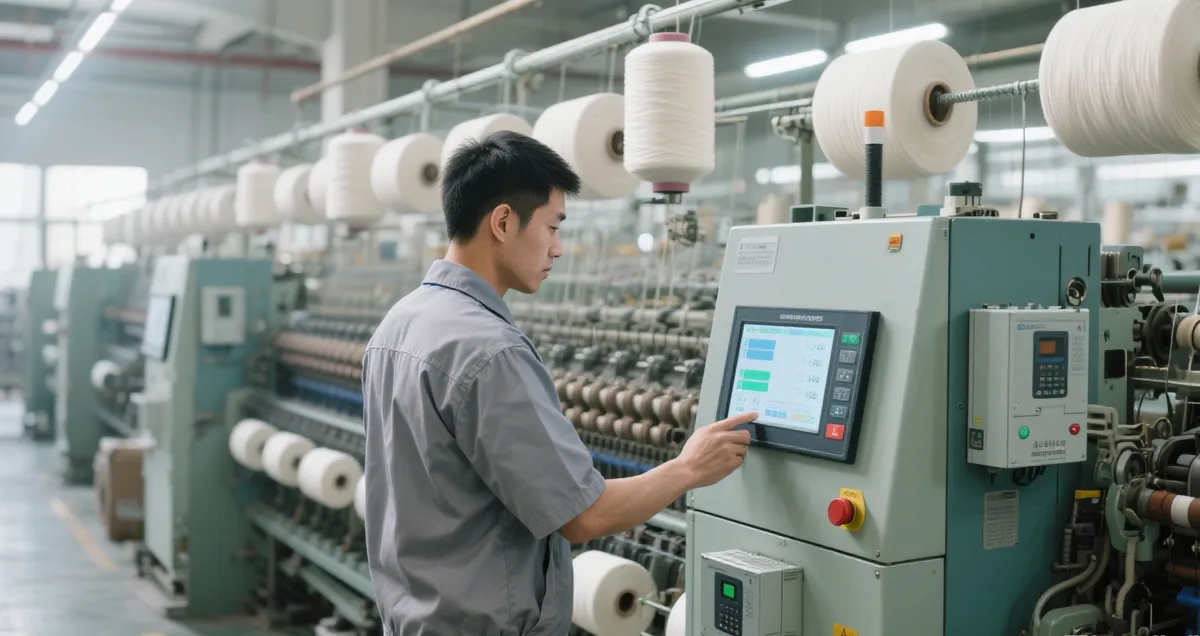
Weaving Link: Uses inverters with a response time of ≤10ms, which are matched with encoders to achieve speed synchronization (with deviation controlled within ±1r/min). Touchscreens are used for convenient parameter modification.
Dyeing & Finishing Link: Takes "temperature-speed coordination" as the core. Dyeing machines are equipped with inverters with PID temperature control; setting machines adopt multi-inverter linkage and are matched with waste heat recovery devices (reducing energy consumption by 15%-20%); dryers adjust speed according to humidity.
The implementation of the scheme involves three phases: research and analysis, selection-installation-commissioning, and personnel training (the cycle for 50 sets of equipment is 1-2 months). It is expected to achieve the following effects: shorten equipment adjustment time by 30%-50%, increase product qualification rate by 5%-8%, reduce electrical energy consumption by 12%-18%, and decrease equipment wear by 25%-30% (extending service life by 3-5 years). Additionally, the scheme can connect with PLC and MES systems to realize real-time data monitoring, providing a technical path for enterprises to achieve efficient, energy-saving, and intelligent production.