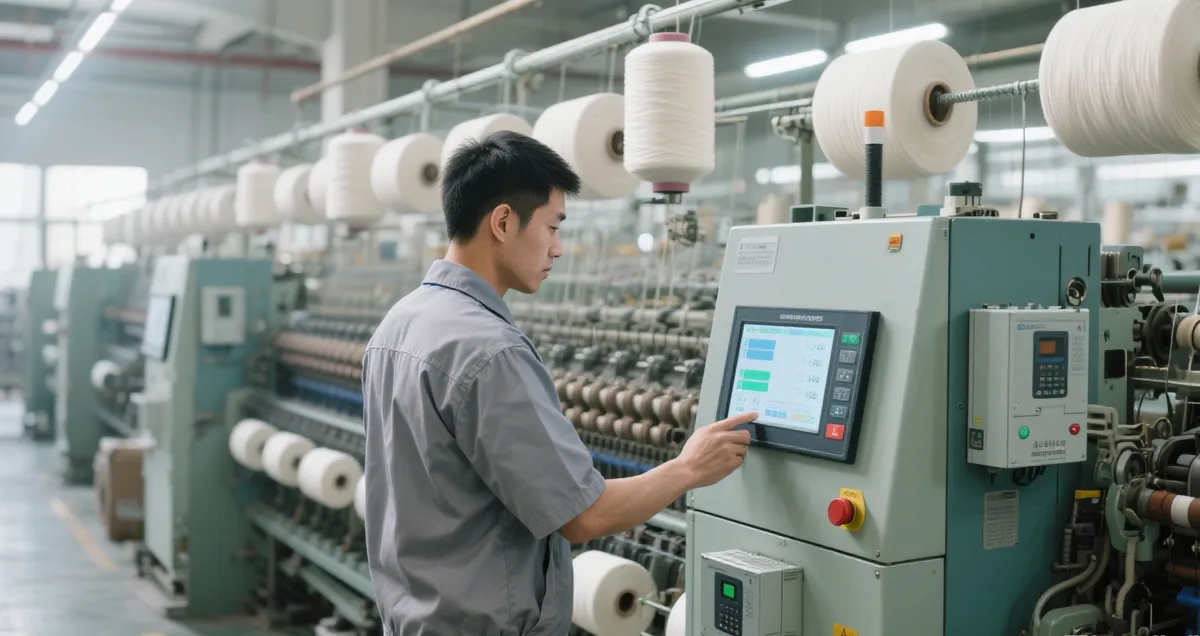
Tantangan
Pada sistem produksi industri tekstil modern, seluruh proses dari pengolahan serat hingga produksi kain jadi menuntut stabilitas operasi peralatan, akurasi pengaturan kecepatan, dan efisiensi pemanfaatan energi yang sangat tinggi. Sebagai perangkat elektronika daya yang mampu pengaturan kecepatan motor tanpa tahapan, dengan kontrol kecepatan presisi, proteksi start lembut, dan optimalisasi konsumsi energi, inverter menjadi komponen kontrol inti yang tak tergantikan dalam sistem tekstil. Digunakan luas pada tahap produksi kunci seperti pemintalan, penenunan, serta pencelupan dan finishing, menjawab titik lemah peralatan tekstil tradisional: pengaturan kecepatan sulit, konsumsi tinggi, dan keausan mekanis besar; memberi dukungan teknis penting bagi perusahaan tekstil menuju produksi efisien, hemat energi, dan cerdas.
Solusi
Customized Inverter Application Scheme for Textile Production
Through customized hardware selection, software programming, and system integration, the scheme covers three core links of textile production: spinning, weaving, and dyeing & finishing.
Spinning Link: Adopts the "inverter + PLC + sensor" architecture. Ring spinning machines are equipped with 11kW-37kW vector-type inverters; drawing frames realize multi-motor synchronous control; and an energy-saving mode is activated during no-load operation.
Weaving Link: Uses inverters with a response time of ≤10ms, which are matched with encoders to achieve speed synchronization (with deviation controlled within ±1r/min). Touchscreens are used for convenient parameter modification.
Dyeing & Finishing Link: Takes "temperature-speed coordination" as the core. Dyeing machines are equipped with inverters with PID temperature control; setting machines adopt multi-inverter linkage and are matched with waste heat recovery devices (reducing energy consumption by 15%-20%); dryers adjust speed according to humidity.
The implementation of the scheme involves three phases: research and analysis, selection-installation-commissioning, and personnel training (the cycle for 50 sets of equipment is 1-2 months). It is expected to achieve the following effects: shorten equipment adjustment time by 30%-50%, increase product qualification rate by 5%-8%, reduce electrical energy consumption by 12%-18%, and decrease equipment wear by 25%-30% (extending service life by 3-5 years). Additionally, the scheme can connect with PLC and MES systems to realize real-time data monitoring, providing a technical path for enterprises to achieve efficient, energy-saving, and intelligent production.