ความท้าทาย
ในระบบการผลิตสมัยใหม่ของอุตสาหกรรมสิ่งทอ กระบวนการทั้งหมดตั้งแต่การแปรรูปเส้นใยจนถึงการผลิตผ้าสำเร็จรูป ต้องการความเสถียรของการเดินเครื่อง ความแม่นยำในการปรับความเร็ว และประสิทธิภาพการใช้พลังงานอย่างสูง ในฐานะอุปกรณ์อิเล็กทรอนิกส์กำลังที่ปรับความเร็วมอเตอร์แบบไร้ขั้นได้ อินเวอร์เตอร์ด้วยการควบคุมความเร็วที่แม่นยำ การป้องกันการสตาร์ทแบบนุ่มนวล และการเพิ่มประสิทธิภาพการใช้พลังงาน กลายเป็นองค์ประกอบควบคุมหลักที่ขาดไม่ได้ของระบบสิ่งทอ ถูกใช้อย่างแพร่หลายในขั้นตอนหลัก เช่น การปั่นเส้นใย การทอผ้า และการย้อม-ตกแต่ง แก้ปัญหาของอุปกรณ์สิ่งทอแบบเดิมได้อย่างมีประสิทธิภาพ เช่น การปรับความเร็วยาก การใช้พลังงานสูง และการสึกหรอเชิงกลสูง ให้การสนับสนุนทางเทคนิคที่สำคัญแก่วิสาหกิจสิ่งทอเพื่อการผลิตที่มีประสิทธิภาพ ประหยัดพลังงาน และอัจฉริยะ
โซลูชัน
Customized Inverter Application Scheme for Textile Production
Through customized hardware selection, software programming, and system integration, the scheme covers three core links of textile production: spinning, weaving, and dyeing & finishing.
Spinning Link: Adopts the "inverter + PLC + sensor" architecture. Ring spinning machines are equipped with 11kW-37kW vector-type inverters; drawing frames realize multi-motor synchronous control; and an energy-saving mode is activated during no-load operation.
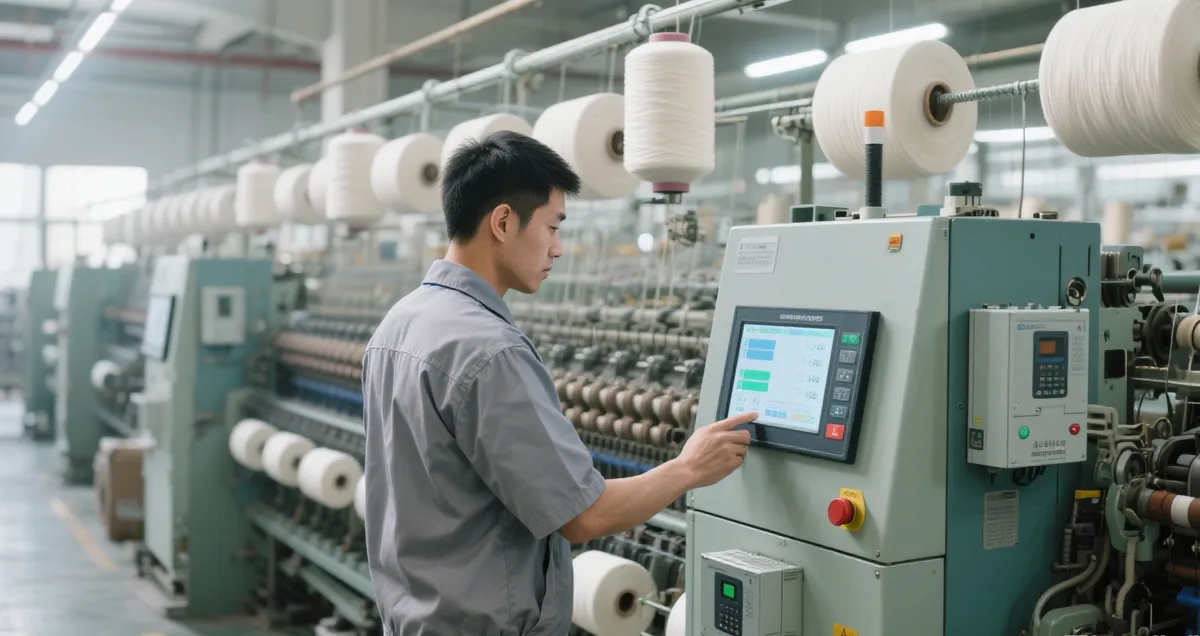
Weaving Link: Uses inverters with a response time of ≤10ms, which are matched with encoders to achieve speed synchronization (with deviation controlled within ±1r/min). Touchscreens are used for convenient parameter modification.
Dyeing & Finishing Link: Takes "temperature-speed coordination" as the core. Dyeing machines are equipped with inverters with PID temperature control; setting machines adopt multi-inverter linkage and are matched with waste heat recovery devices (reducing energy consumption by 15%-20%); dryers adjust speed according to humidity.
The implementation of the scheme involves three phases: research and analysis, selection-installation-commissioning, and personnel training (the cycle for 50 sets of equipment is 1-2 months). It is expected to achieve the following effects: shorten equipment adjustment time by 30%-50%, increase product qualification rate by 5%-8%, reduce electrical energy consumption by 12%-18%, and decrease equipment wear by 25%-30% (extending service life by 3-5 years). Additionally, the scheme can connect with PLC and MES systems to realize real-time data monitoring, providing a technical path for enterprises to achieve efficient, energy-saving, and intelligent production.