課題
現代の紡績業界の生産システムでは、繊維加工から完成生地の生産までの全工程が、設備運転の安定性・速度調整精度・エネルギー利用効率に極めて高い要件を課しています。モータの無段階速度調整を可能にするパワーエレクトロニクス機器として、インバータは精密な速度制御、ソフト始動保護、消費エネルギー最適化により、紡績システムに不可欠な中核制御部品です。紡糸、織機、染め仕上げなどの主要工程で広く採用され、従来設備の速度調整困難・高消費エネルギー・機械的摩耗大といった課題を効果的に解決。紡績企業の効率的・省エネ・インテリジェント生産を技術的に支えます。
ソリューション
Customized Inverter Application Scheme for Textile Production
Through customized hardware selection, software programming, and system integration, the scheme covers three core links of textile production: spinning, weaving, and dyeing & finishing.
Spinning Link: Adopts the "inverter + PLC + sensor" architecture. Ring spinning machines are equipped with 11kW-37kW vector-type inverters; drawing frames realize multi-motor synchronous control; and an energy-saving mode is activated during no-load operation.
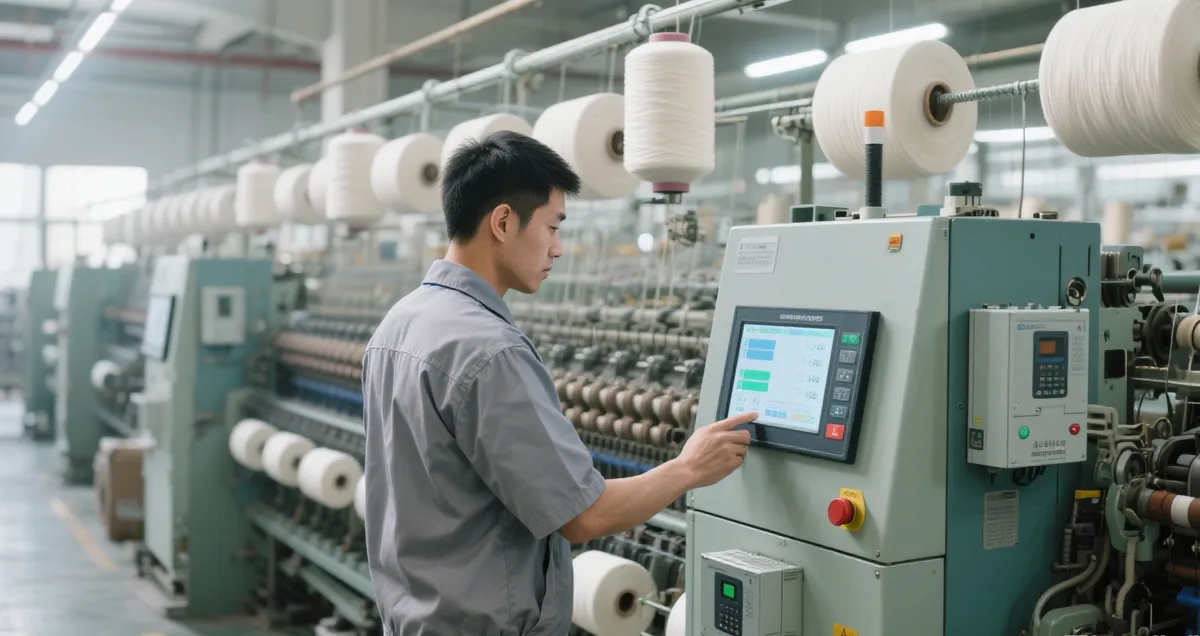
Weaving Link: Uses inverters with a response time of ≤10ms, which are matched with encoders to achieve speed synchronization (with deviation controlled within ±1r/min). Touchscreens are used for convenient parameter modification.
Dyeing & Finishing Link: Takes "temperature-speed coordination" as the core. Dyeing machines are equipped with inverters with PID temperature control; setting machines adopt multi-inverter linkage and are matched with waste heat recovery devices (reducing energy consumption by 15%-20%); dryers adjust speed according to humidity.
The implementation of the scheme involves three phases: research and analysis, selection-installation-commissioning, and personnel training (the cycle for 50 sets of equipment is 1-2 months). It is expected to achieve the following effects: shorten equipment adjustment time by 30%-50%, increase product qualification rate by 5%-8%, reduce electrical energy consumption by 12%-18%, and decrease equipment wear by 25%-30% (extending service life by 3-5 years). Additionally, the scheme can connect with PLC and MES systems to realize real-time data monitoring, providing a technical path for enterprises to achieve efficient, energy-saving, and intelligent production.