Thách thức
Trong hệ thống sản xuất dệt hiện đại, toàn bộ quy trình từ gia công xơ đến sản xuất vải thành phẩm đặt yêu cầu rất cao về độ ổn định vận hành thiết bị, độ chính xác điều tốc và hiệu quả sử dụng năng lượng. Là thiết bị điện tử công suất điều chỉnh tốc độ không gian cấp, nhờ điều khiển tốc độ chính xác, bảo vệ khởi động mềm và tối ưu tiêu hao năng lượng, biến tần trở thành linh kiện điều khiển lõi không thể thiếu trong hệ thống dệt. Được dùng rộng rãi trong các khâu then chốt như sợi, dệt, nhuộm-hoàn tất, giải quyết hiệu quả điểm đau của thiết bị dệt truyền thống: khó điều tốc, tiêu hao cao, mài mòn cơ khí lớn; hỗ trợ kỹ thuật quan trọng cho doanh nghiệp dệt đạt sản xuất hiệu quả, tiết kiệm điện và thông minh.
Giải pháp
Customized Inverter Application Scheme for Textile Production
Through customized hardware selection, software programming, and system integration, the scheme covers three core links of textile production: spinning, weaving, and dyeing & finishing.
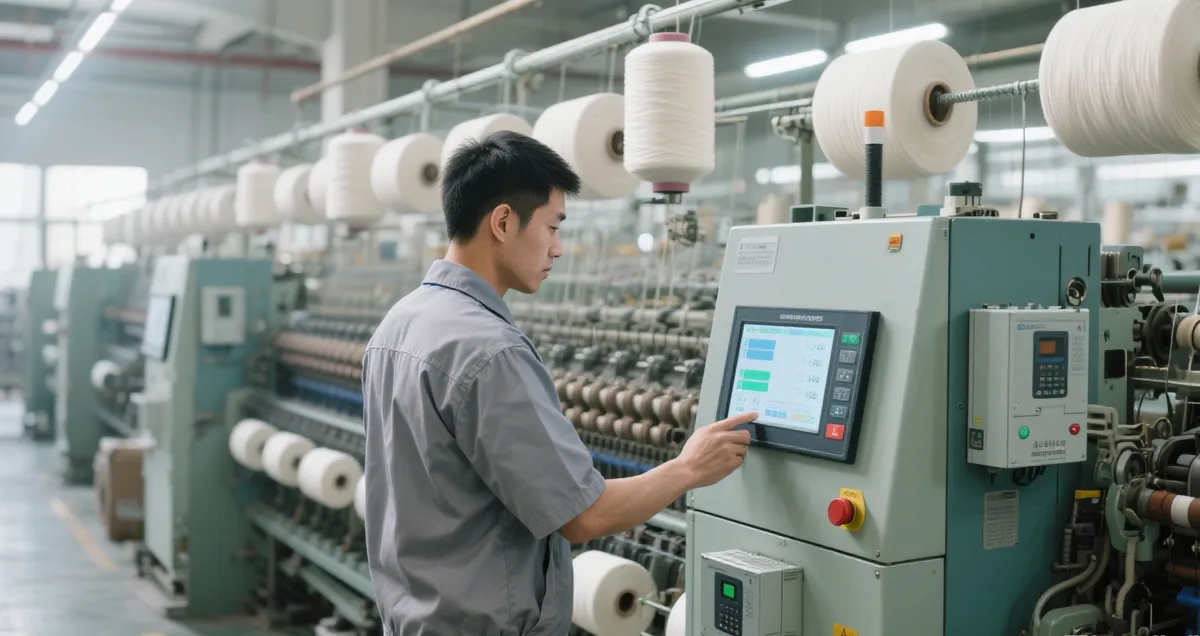
Spinning Link: Adopts the "inverter + PLC + sensor" architecture. Ring spinning machines are equipped with 11kW-37kW vector-type inverters; drawing frames realize multi-motor synchronous control; and an energy-saving mode is activated during no-load operation.
Weaving Link: Uses inverters with a response time of ≤10ms, which are matched with encoders to achieve speed synchronization (with deviation controlled within ±1r/min). Touchscreens are used for convenient parameter modification.
Dyeing & Finishing Link: Takes "temperature-speed coordination" as the core. Dyeing machines are equipped with inverters with PID temperature control; setting machines adopt multi-inverter linkage and are matched with waste heat recovery devices (reducing energy consumption by 15%-20%); dryers adjust speed according to humidity.
The implementation of the scheme involves three phases: research and analysis, selection-installation-commissioning, and personnel training (the cycle for 50 sets of equipment is 1-2 months). It is expected to achieve the following effects: shorten equipment adjustment time by 30%-50%, increase product qualification rate by 5%-8%, reduce electrical energy consumption by 12%-18%, and decrease equipment wear by 25%-30% (extending service life by 3-5 years). Additionally, the scheme can connect with PLC and MES systems to realize real-time data monitoring, providing a technical path for enterprises to achieve efficient, energy-saving, and intelligent production.