Solutions
Industrial drive products with a strong performance-to-cost ratio and rapid customization.
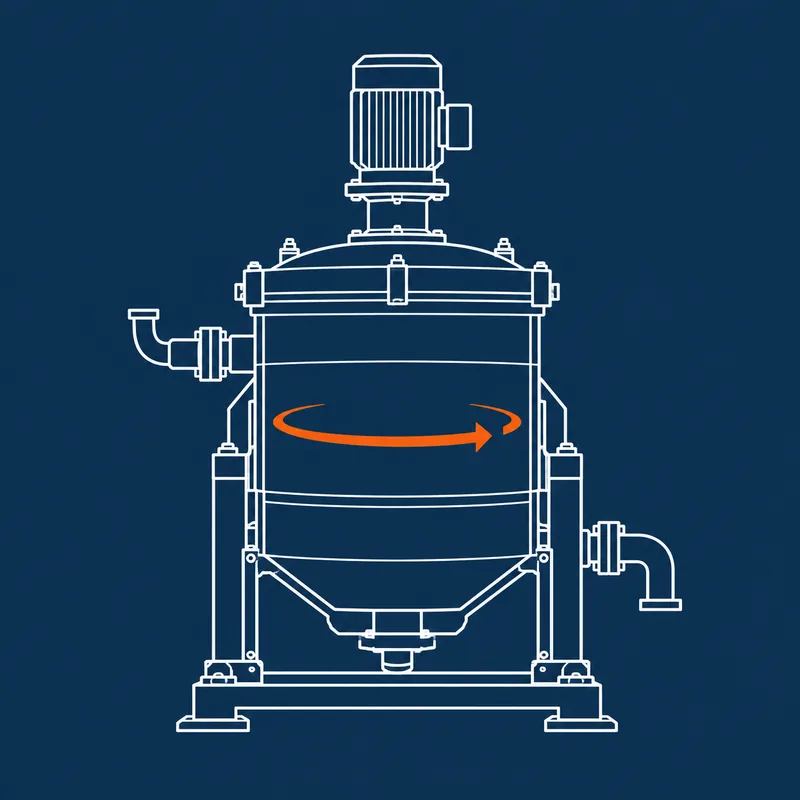
The Application of Inverters in Centrifuges
As a core piece of equipment in the industrial sector for achieving "solid-liquid separation, liquid-liquid separation, and solid-solid classification" (e.g., chemical crystallization separation, food starch dehydration, sewage treatment sludge dehydration, and mineral separation in mines), centrifuges operating in the traditional fixed-frequency mode rely on "contactor start-stop + pulley speed regulation". This traditional mode suffers from pain points such as energy waste, low speed regulation accuracy, and large start-stop shocks. By leveraging the vector control technology of inverters, this solution adapts to the load requirements of centrifuges under different operating conditions (start-up, acceleration, stable separation, and deceleration discharge), enabling full-process intelligent control.
View Details →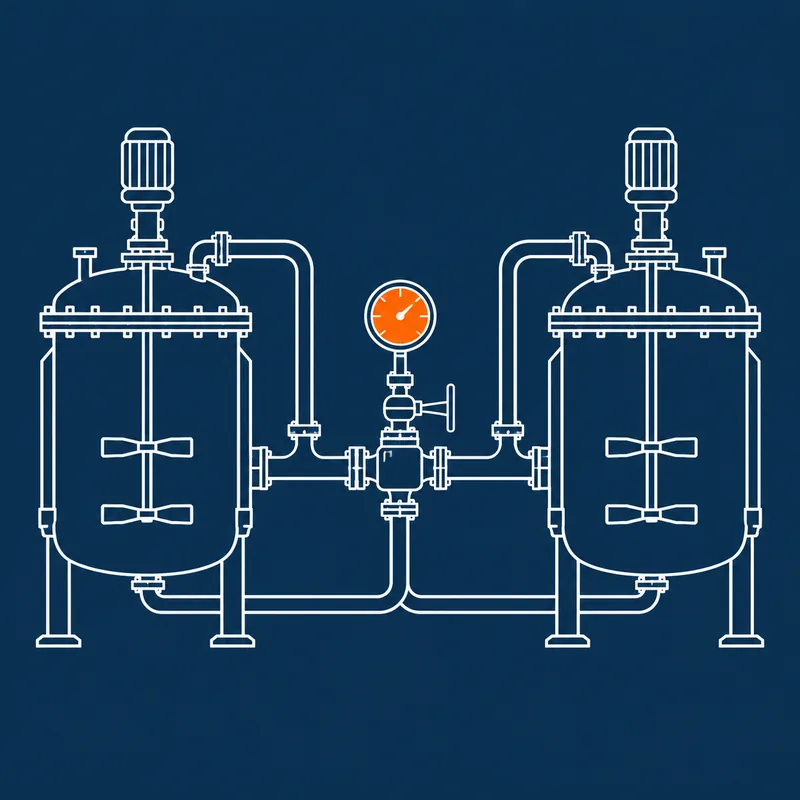
The Application of Inverters in Chemical Industry Systems
In chemical industry systems, the production process has extremely high requirements for the precise control of motor speed, the efficient utilization of energy, and the stable operation of equipment. As a power electronic device capable of achieving stepless adjustment of motor speed, the inverter can not only significantly optimize the core links of chemical production, reduce energy consumption, and improve system safety by changing the power frequency and voltage input to the motor, but also, by virtue of its precise matching with process requirements, become a key core component of modern chemical automation systems. Its value is not limited to being an "energy-saving tool"; it also serves as a core support for "improving production accuracy, ensuring system safety, and promoting intelligent transformation". Combined with environment-adaptive selection and reliability design, it effectively reduces the energy consumption costs and equipment failure rates of chemical enterprises, provides key guarantees for the continuity and stability of chemical production, and is an indispensable and important part of modern chemical automation systems.
View Details →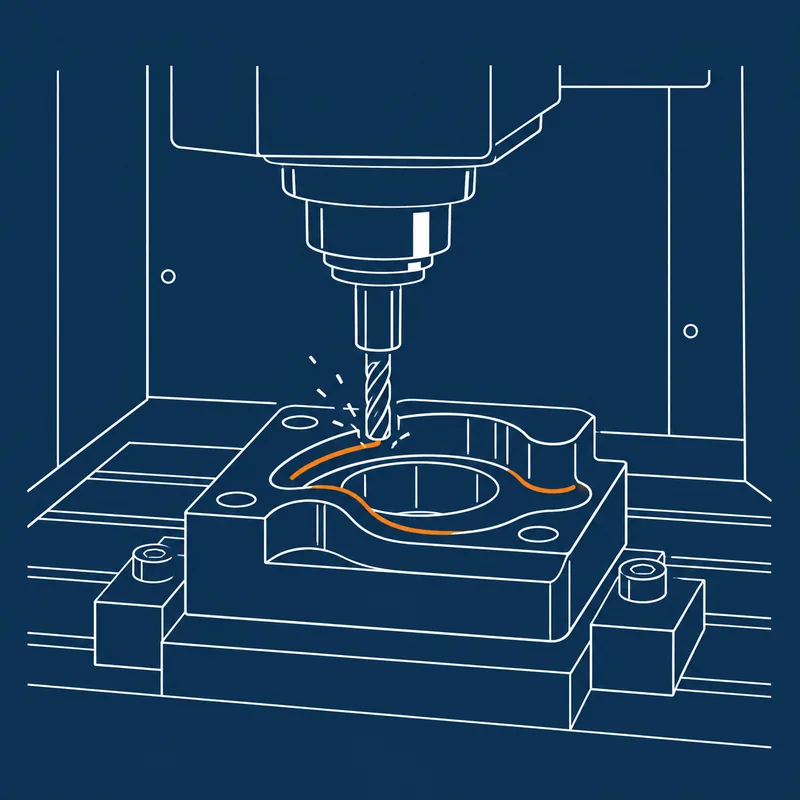
The Application of Inverters in CNC Machine Tool Systems
In modern CNC (Computer Numerical Control) machine tool systems, as a core power electronic control device, the inverter has become a key link connecting the power supply system and the actuator, thanks to its precise speed regulation performance, stable torque output, and efficient energy management capabilities. It is widely used in core links such as spindle drive, feed transmission, and auxiliary function control, providing important technical support for CNC machine tools to achieve high-precision, high-efficiency, and high-reliability machining.
View Details →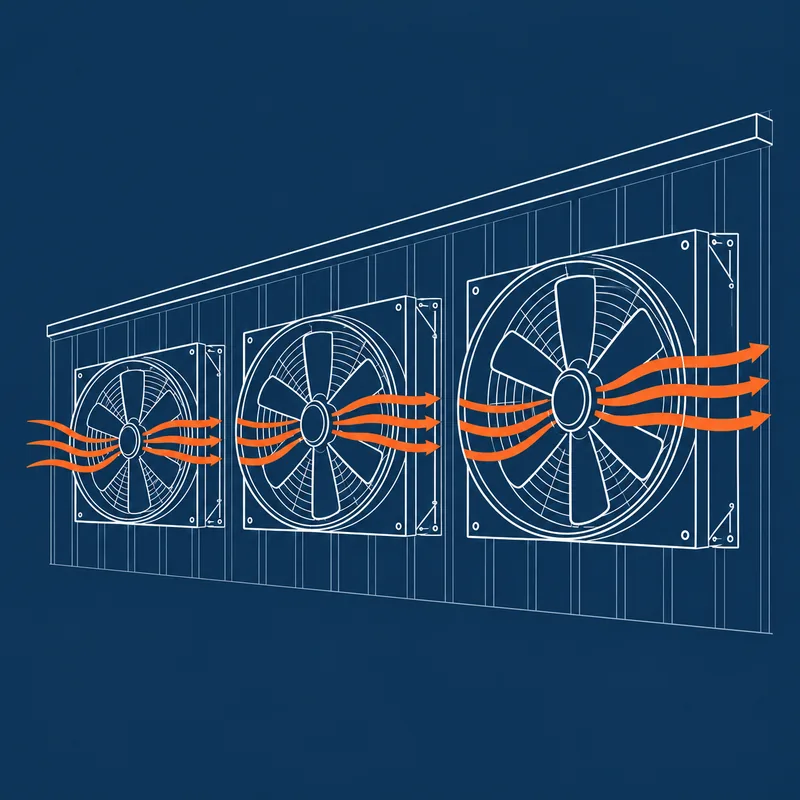
The Application of Inverters in Fan Systems
As core power equipment in industrial production and civil fields (such as factory ventilation, boiler induced draft, sewage treatment aeration, and building air-conditioning air supply), fans operating in the traditional fixed-frequency mode have problems like "overcapacity operation" (a situation where a high-power motor drives a low-load fan, similar to "using a large horse to pull a small cart"), excessive energy consumption, and difficulty in speed regulation. By adopting inverter-based speed control and combining it with the load characteristics of fans (square torque load, where power is proportional to the cube of speed), this solution enables energy-efficient operation, precise flow control, and intelligent management of fans. It is suitable for fan system transformation and new construction projects in various fields such as metallurgy, chemical engineering, water treatment, and building heating, ventilation, and air conditioning (HVAC).
View Details →
The Application of Inverters in Lithium-Ion Battery Equipment Systems
In the manufacturing of lithium-ion batteries, every process—from electrode preparation and cell assembly to formation and grading—imposes strict requirements on the equipment’s speed, tension, and precision control. As a core power electronic device capable of motor speed regulation and energy optimization, the inverter can precisely control the motor’s operating state by adjusting the frequency and voltage of the output power supply. It serves not only as a key component and the "power adjustment core" in lithium-ion battery equipment systems (ensuring production efficiency, product quality, and process stability) but also as a critical foundation for guaranteeing the quality, efficiency, and cost control of lithium-ion battery production. Moreover, with the continuous upgrading of lithium-ion battery processes, the inverter will continue to iterate in terms of control precision, integration level, and intelligence, further driving the high-quality development of the lithium-ion battery manufacturing industry.
View Details →
The Application of Inverters in Metallurgical Systems
Frequency inverters are core equipment for efficient energy conservation and precision control in metallurgical systems. By precisely adjusting motor speed, they are applied throughout the entire production process: in the raw material phase, they control conveying and crushing equipment to achieve stable output and energy savings; in the steelmaking phase, they drive converters, oxygen lances, and continuous casting machines to ensure process precision and safety; in the steel rolling phase, they meet the high dynamic response and synchronization requirements of rolling mills and coilers to improve steel quality; and in the renovation of auxiliary systems, they can reduce energy consumption by 20%-50% for "high energy-consuming equipment" such as blast furnace fans. For selection, frequency inverters must be adapted to the heavy-load and harsh environments of metallurgy—products with strong overload capacity and high protection levels should be chosen, while also considering power grid, braking, and communication requirements. With advantages such as high control precision and extended equipment service life, frequency inverters have become key to enhancing the competitiveness of metallurgical systems.
View Details →
The Application of Inverters in Mining Systems
Inverters have evolved from "optional equipment" to "essential equipment" in mining systems. Their application not only addresses the "high energy consumption, high wear and tear, and low efficiency" issues of traditional power-frequency drives but also serves as a core pillar for the intelligent transformation of mines. In the future, with the continuous advancement of explosion-proof technology, Internet of Things (IoT) technology, and energy-saving algorithms, inverters will be deeply integrated into the "unmanned mining and intelligent management and control" system of mines, providing crucial technical support for mines to achieve "safe, efficient, and green" production.
View Details →
The Application of Inverters in Printing Systems
As a power electronic device capable of achieving precise control of motor speed, the inverter, by virtue of its core advantages of "speed regulation on demand, energy conservation and consumption reduction, and stable operation", has become a key core component for modern printing systems (from traditional offset printing, flexographic printing to digital printing) to realize automated and intelligent production. By changing the frequency and voltage of the output power supply, it drives the motors of various executive mechanisms in printing equipment (such as main drive motors, paper feeding motors, drying motors, etc.), fundamentally solving the pain points of traditional printing equipment, such as "constant-speed operation, high energy consumption, difficult speed regulation, and poor synchronization", and significantly improving the quality of printed products, production efficiency and equipment reliability.
View Details →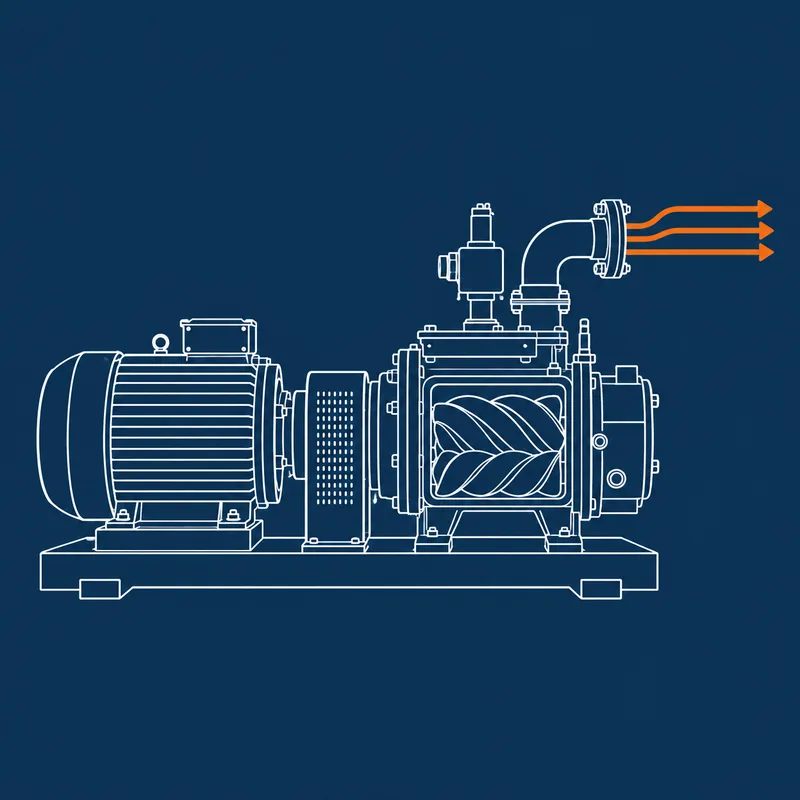
Application Solution of Screw Air Compressor
Screw air compressors are positive-displacement air compressors widely used in the industrial sector. Characterized by high efficiency, stability, low maintenance requirements, and continuous air supply, they have become one of the most mainstream compressed air equipment in modern factories. Traditional fixed-speed (constant-frequency) air compressors can only operate at "full speed" or be "shut down". When the air demand decreases, they will enter no-load operation or experience frequent start-stop cycles, resulting in significant energy waste. In contrast, frequency inverters control the motor speed by changing the power supply frequency, achieving the following benefits: ✅ On-demand air supply: The air output matches the actual demand. ✅ Constant-pressure air supply: Maintains stable system pressure. ✅ Energy conservation and consumption reduction: Eliminates no-load operation and frequent start-stop cycles.
View Details →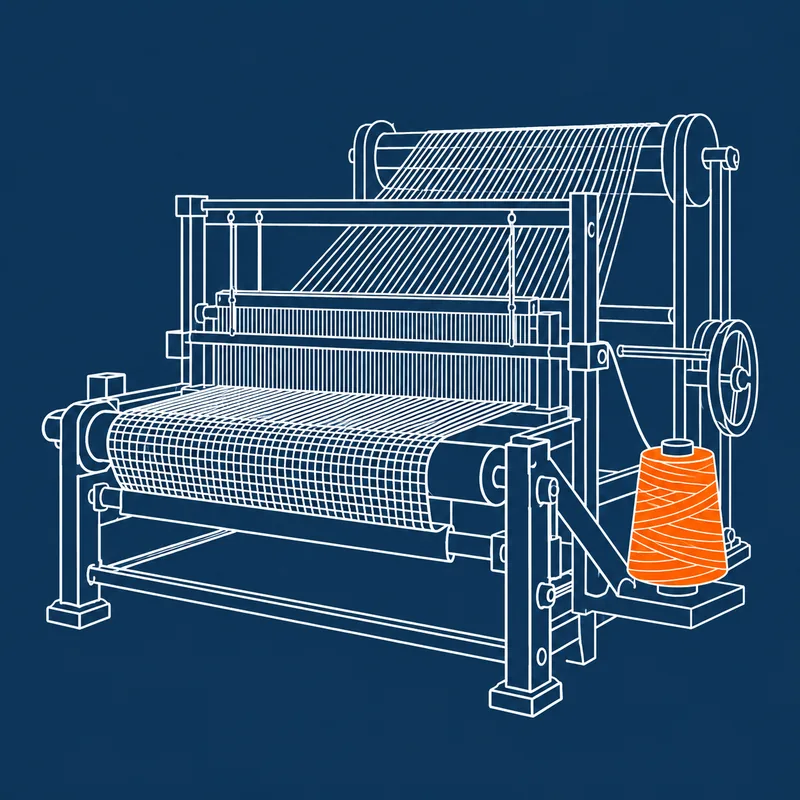
The Application of Inverters in Textile Systems
In the modern production system of the textile industry, the entire process from fiber processing to the production of finished fabrics has extremely high requirements for the stability of equipment operation, speed regulation accuracy, and energy utilization efficiency. As a power electronic device capable of achieving stepless speed regulation of motors, the inverter, by virtue of its precise speed control, soft-start protection, and energy consumption optimization capabilities, has become an indispensable core control component in textile systems. It is widely used in key production links such as spinning, weaving, and dyeing & finishing, effectively solving the pain points of traditional textile equipment, such as difficult speed regulation, high energy consumption, and large mechanical wear. It provides important technical support for textile enterprises to achieve efficient, energy-saving, and intelligent production.
View Details →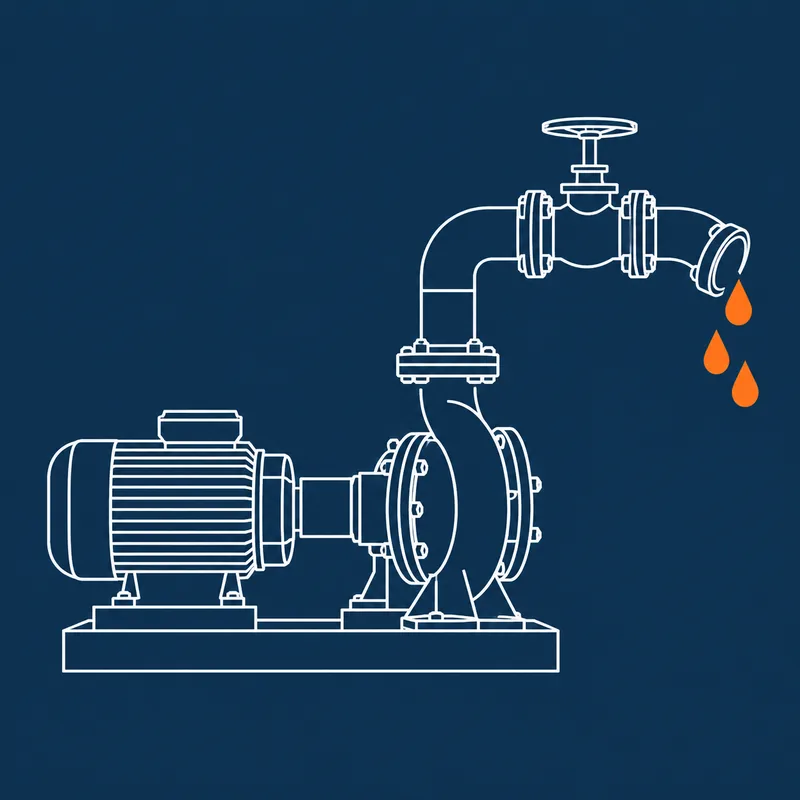
The Application of Inverters in Water Pump Systems
In modern industry and daily life, water pump systems are widely used in various fields such as water supply, drainage, sewage treatment, and industrial processes. Traditional water pump systems usually operate at a fixed speed, making it difficult to flexibly adapt to changing flow and pressure demands. This leads to severe energy waste, increased equipment wear, and poor control accuracy. With the rapid development of frequency inverter technology, its application in water pump systems has become increasingly widespread, providing an effective solution to the above problems and enabling efficient, energy-saving, and precise control of water pump systems.
View Details →